
AI in Education: Meaning, Examples, Benefits & Future in 2026
Artificial Intelligence is reshaping the education system by making learning more personalized, accessible, and data-driven. From adaptive learning platforms to automated assessments, AI is changing how students learn and how teachers teach.
In countries like India, AI in education is emerging as a key driver for large-scale learning, skill development, and digital inclusion across schools, universities, and professional training programs.
What Is AI in Education?
AI in education refers to the use of artificial intelligence technologies to enhance teaching, learning, assessment, and educational administration.
AI systems analyze student data, learning patterns, and performance to deliver personalized learning experiences. Unlike traditional one-size-fits-all education models, AI adapts content based on individual strengths, weaknesses, and pace.
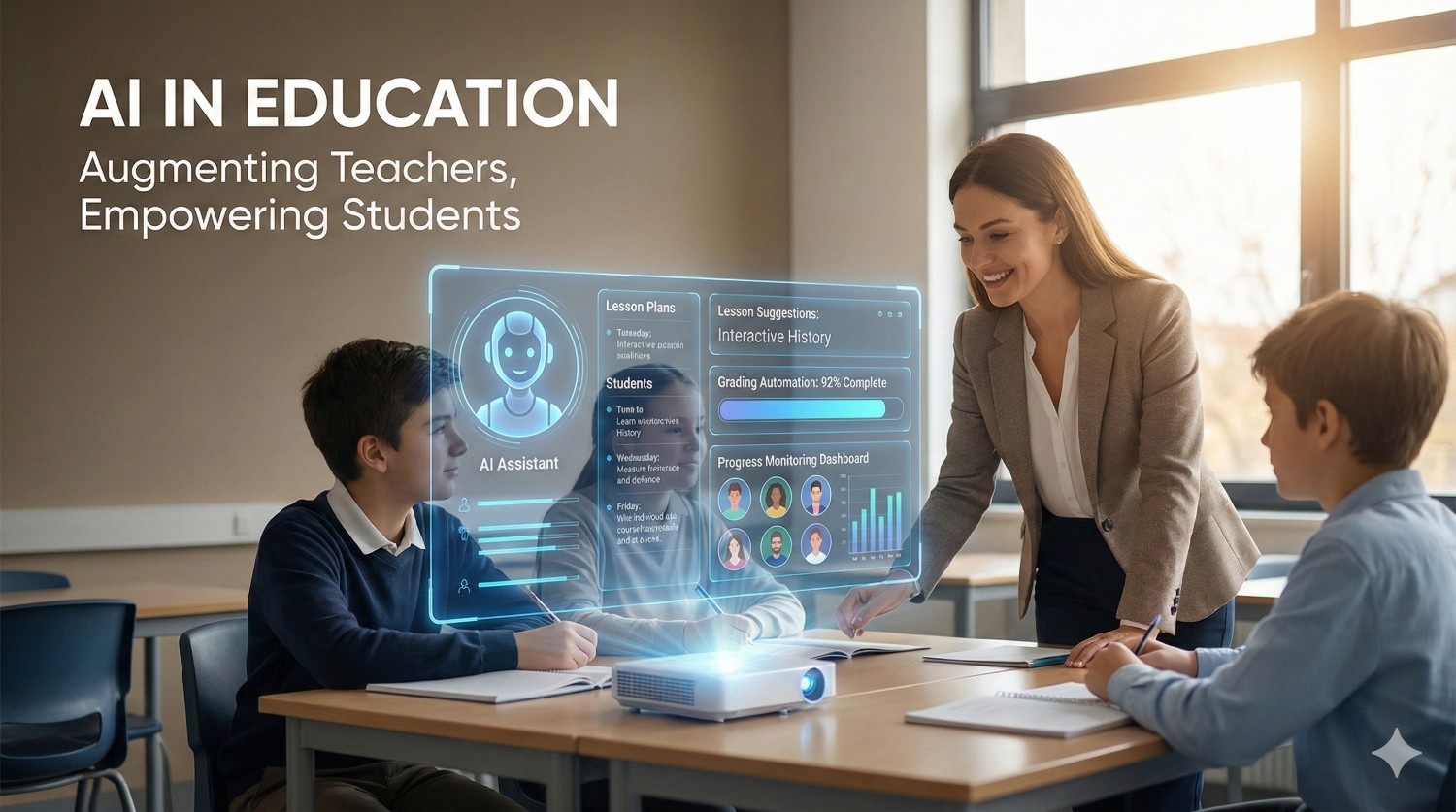
This shift allows educators to focus more on mentoring and critical thinking while AI handles repetitive tasks such as grading, attendance tracking, and progress monitoring.
How Is AI Used in Education Today?
AI is already being applied across multiple areas of the education sector, improving both learning outcomes and operational efficiency.
- Personalized learning platforms that adapt content in real time
- AI tutors and chatbots for instant student support
- Automated grading and evaluation systems
- Learning analytics for performance tracking
- Content creation tools for teachers
Examples of AI in Education
AI-driven learning platforms recommend lessons based on student progress, while intelligent assessment tools identify knowledge gaps early. Virtual teaching assistants help students clarify doubts outside classroom hours.
In India, AI is being explored to scale quality education in rural areas, improve teacher training, and support competitive exam preparation including UPSC and professional certifications.
Benefits of AI in Education
| Benefit | Impact |
|---|---|
| Personalized Learning | Adapts content to individual student needs |
| Accessibility | Supports students with diverse learning abilities |
| Efficiency | Reduces administrative workload for teachers |
| Data-Driven Insights | Improves academic planning and outcomes |
| Scalability | Enables large-scale digital education |
Challenges and Limitations of AI in Education
Despite its advantages, AI in education also raises concerns related to data privacy, algorithmic bias, digital divide, and over-reliance on technology.
Ethical implementation, transparent data policies, and teacher training are essential to ensure AI complements education rather than replacing human judgment.
Future of AI in Education
AI will not replace teachers. Instead, it will redefine their role. Educators will increasingly act as mentors, facilitators, and critical thinkers while AI manages personalization and analytics.
By 2026 and beyond, AI is expected to play a central role in skill-based learning, lifelong education, and workforce readiness.
Frequently Asked Questions
Will AI replace teachers by 2030?AI will support teachers, not replace them. Human guidance remains essential.
Is AI the future of education?Yes. AI will play a key role in making education more personalized and scalable.
What skills are needed for AI in education?Digital literacy, data understanding, and critical thinking are essential.
© 2026. All rights reserved.