
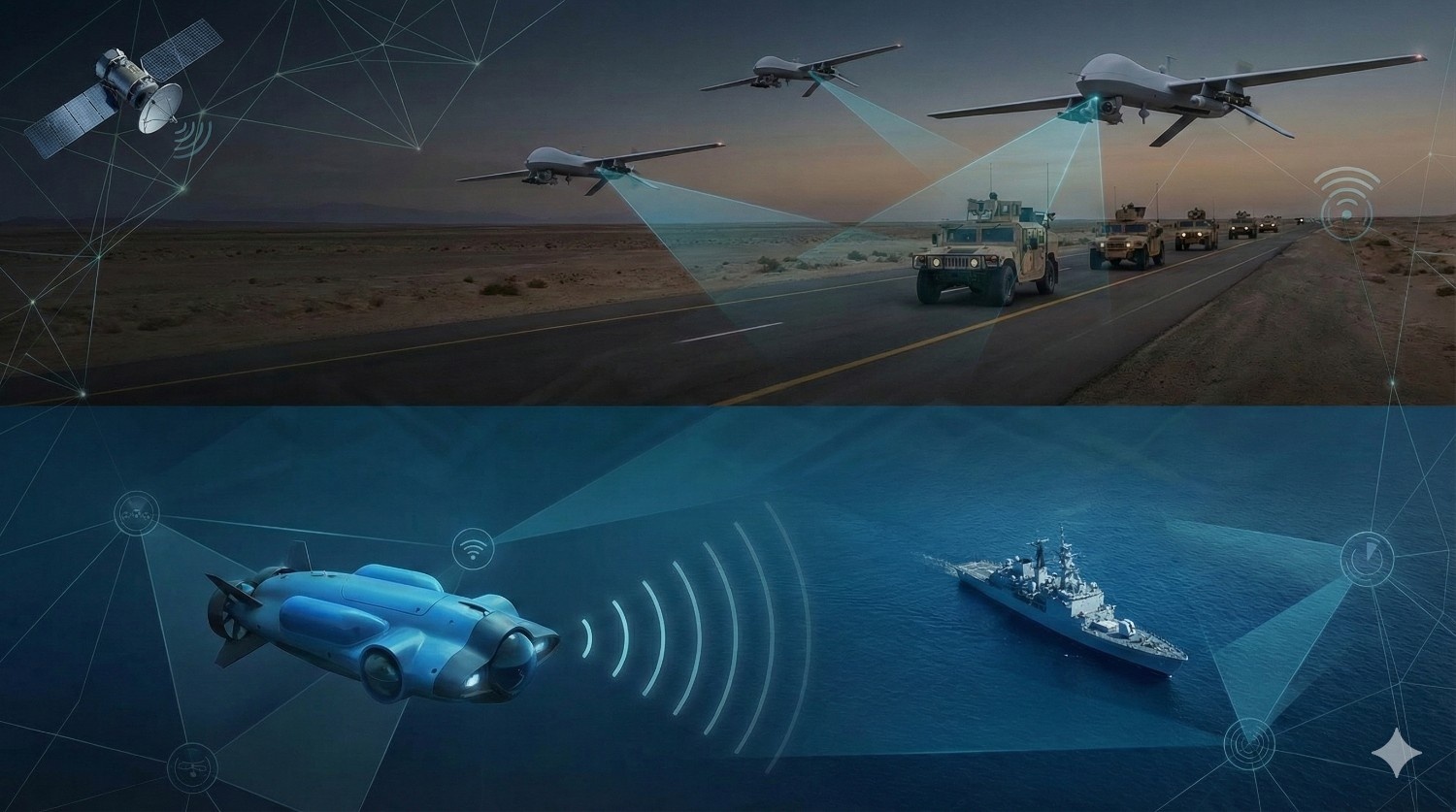
AI-Powered Drones in Defence: Aerial & Underwater Systems Explained
Artificial Intelligence has transformed military drone technology by enabling autonomous navigation, real-time threat detection, and mission decision-making. AI-powered drones now play a critical role in modern defence strategies.
From aerial surveillance drones to autonomous underwater vehicles, AI is redefining how armed forces monitor borders, protect maritime assets, and conduct high-risk operations.
What Are AI-Powered Defence Drones?
AI-powered defence drones are unmanned systems that use artificial intelligence for autonomous flight, navigation, target recognition, and mission execution.
Unlike remotely controlled drones, AI-enabled drones can analyze sensor data, adapt to dynamic environments, and make decisions with minimal human intervention. These systems operate across air, land, and underwater domains.
They act as force multipliers by extending surveillance reach, reducing human risk, and enabling continuous monitoring in hostile environments.
Aerial Drones in the Defence Sector
Aerial drones are widely used by defence forces for reconnaissance, intelligence gathering, border patrol, and combat support. AI enables these drones to identify objects, track targets, and avoid obstacles autonomously.
In India, aerial drones support surveillance along sensitive borders and provide real-time intelligence to ground forces, improving situational awareness and response time.
Underwater Drones in Defence
Underwater drones, also known as Autonomous Underwater Vehicles (AUVs) or Remotely Operated Vehicles (ROVs), are used for naval surveillance, mine detection, submarine tracking, and seabed mapping.
AI enables underwater drones to navigate without GPS, interpret sonar data, detect anomalies, and operate at significant depths for extended durations.
Applications of AI Drones in Defence
- Border surveillance and reconnaissance
- Maritime security and underwater threat detection
- Intelligence, surveillance, and reconnaissance missions
- Search and rescue operations
- Logistics and supply delivery in hostile zones
AI Drones in India’s Defence Sector
India is investing heavily in indigenous drone development to strengthen defence preparedness. AI-driven aerial and underwater drones are being explored for naval surveillance, border monitoring, and disaster response.
These initiatives support strategic autonomy, reduce dependence on imports, and enhance operational efficiency across the armed forces.
Challenges of Defence Drone Technology
Key challenges include cybersecurity risks, electronic warfare threats, reliability in extreme environments, and ethical concerns related to autonomous systems.
Ensuring secure communication, human oversight, and robust testing remains essential for safe deployment.
Future of AI Drones in Defence
The future of military drones lies in autonomous swarms, human-AI teaming, and multi-domain operations combining aerial and underwater systems.
AI-powered drones will increasingly shape defence strategy, deterrence, and battlefield dominance.
Frequently Asked Questions
Does the military use underwater drones?Yes. Underwater drones are used for naval surveillance, mine detection, and submarine tracking.
Is AI used in military drones?Yes. AI enables autonomous navigation, target recognition, and decision support.
Does India have defence drones?Yes. India is developing and deploying indigenous aerial and underwater drones.
© 2026. All rights reserved.